
Makhana

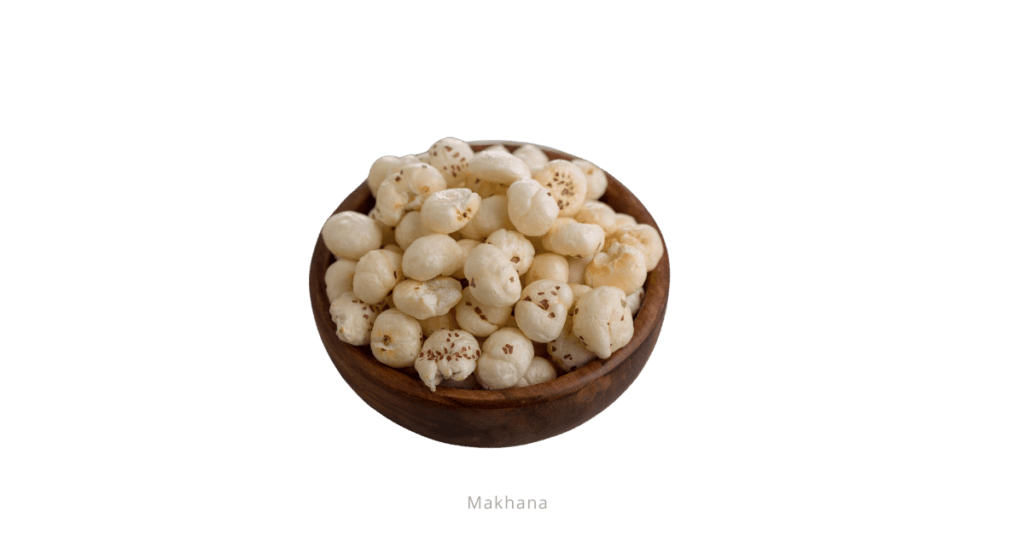
- Makhana, also known as fox nuts, lotus seeds, gorgon nuts, and phool makhana, is a type of aquatic crop.
- It belongs to the Nympheaceae family and its botanical name is Euryale ferox Salisb.
- This crop is widely cultivated in stagnant water bodies, such as ponds, swamps, oxbow lakes, ditches, and low-lying areas, in warm, tropical, and subtropical climates.
- It is a nutrient-rich food that offers several health benefits.
- It has a low Glycemic Index (GI), making it an ideal food for people with diabetes.
- It is also high in fiber content, low in calories, and rich in potassium, Vitamin B1, carotene, iodine, iron, and phosphorous.
- The cultivation of makhana involves sowing the seeds in shallow water, allowing them to grow until they flower and produce seeds.
- The harvesting process typically occurs during the summer months, where the mature seeds are collected from the water, dried in the sun, and then roasted to remove the hard outer shell.
- The seeds are then popped to make them edible.
- Makhana is native to South-East Asia and China but is now distributed and exported to various parts of the world.
- Major producers of makhana include India, Japan, Korea, Russia, North America, Nepal, Bangladesh, and several other countries.
- In India, Makhana has been traditionally cultivated in Bihar, with major production concentrated in the districts of Madhubani, Darbhanga, and others.
- Other states where makhana is produced include West Bengal, Manipur, Tripura, Assam, Jammu & Kashmir, Eastern Orissa, Madhya Pradesh, Rajasthan, and Uttar Pradesh.
Latest News
- 16 July 2024:
- The Bihar government has recently urged the Central government to declare a Minimum Support Price (MSP) for makhana, an aquatic crop.
- It has also highlighted the lack of manpower at the Indian Council of Agricultural Research – National Research Centre (ICAR-NRC) for Makhana in Darbhanga.



Responses