
Squalus Hima

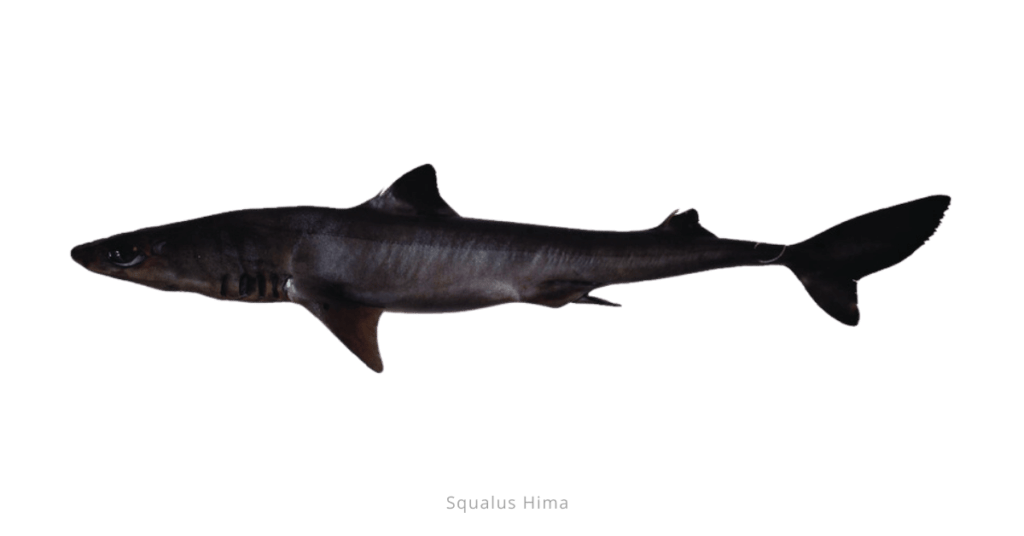
- Squalus Hima is a unique species of dogfish shark, characterized by specific features like the number of precaudal vertebrae, total vertebrae, teeth count, trunk and head heights, fin structure, and fin color.
- It belongs to the genus Squalus, which is part of the family Squalidae.
- It is commonly known as spurdogs and are characterized by smooth dorsal fin spines.
- Squalus Hima inhabits deep-water regions along the Arabian Sea, off the southwest coast of India, adding to the diversity of dogfish sharks in this region.
- Its distinguishing features include an angular short snout, a small mouth almost as wide as the snout, first dorsal fin origin behind the pectoral fins, and a body without any spots.
Conservation and Economic Implications
- Species from the genus Squalus, along with Centrophorus, are harvested for their liver oil, rich in squalene, a highly sought-after substance used in high-end cosmetic and anticancer products.
- The conservation of these species is critical, as they are commercially important and sometimes caught as by-catch in fisheries targeting other species.
Interesting Facts about dogfish sharks
- Dogfish sharks belong to the genus Squalus and family Squalidae.
- They have a slender body, smooth dorsal fin spines, an angular short snout, and a small mouth almost as wide as the snout.
- They inhabit deep waters, typically between 200-400 meters, in oceans worldwide.
- They are ovoviviparous, meaning they produce eggs that hatch inside the mother’s body, and give birth to live young.
- They are one of the few venomous shark species, possessing small spines in their dorsal fins that deliver a mild venom.
- They are generally solitary animals, but sometimes gather in large schools for feeding or mating.
Latest News
- 16 July 2024:
- Scientists from the Zoological Survey of India (ZSI) have made a significant discovery, identifying a new species of deep-water dogfish shark, Squalus Hima, off the coast of Kerala in the Arabian Sea.
- This finding is crucial for the conservation of shark species, as dogfish sharks are commercially exploited for their fins, liver oil, and meat.



Responses