
EU Carbon Tax Shock

Why in the News?
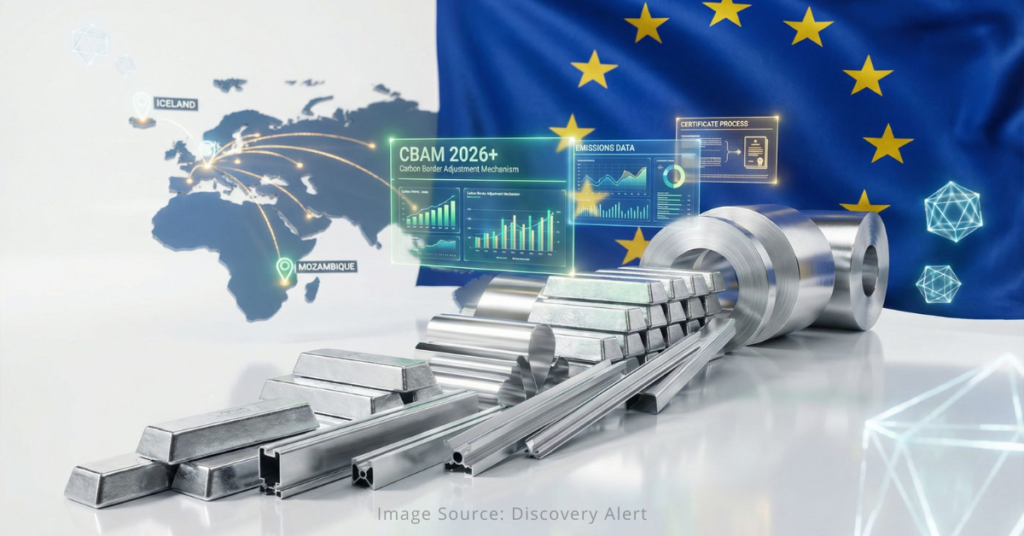
- The European Union has begun full implementation of the Carbon Border Adjustment Mechanism (CBAM) from January 1, 2026, marking the world’s first operational carbon border tax.
- Indian exports of steel and aluminium, which form a major share of India–EU trade, are expected to face a 15–22 percent increase in landed costs.
- The move has triggered concerns in India regarding export competitiveness, equity in climate action, and WTO compatibility.
Basics about Carbon Tax and Carbon Pricing
- A carbon tax is a policy instrument that places a financial cost on greenhouse gas emissions, usually calculated per tonne of carbon dioxide emitted.
- The core objective of carbon taxation is to discourage carbon-intensive production and encourage adoption of cleaner technologies.
- Globally, carbon pricing takes multiple forms:
- Emissions-based tax, where firms pay directly for the volume of emissions generated.
- Goods-based tax, imposed on carbon-intensive products such as coal, steel, or petroleum.
- Cap-and-trade systems, where governments cap total emissions and allow trading of emission permits.
- Carbon tariffs, which tax imports based on their embedded carbon content to prevent carbon leakage.
- CBAM represents a shift from domestic carbon pricing to cross-border climate regulation.
What is the EU’s Carbon Border Adjustment Mechanism (CBAM)?
- CBAM is a climate-linked trade measure introduced by the European Union to impose a carbon price on imports from countries with weaker climate regulations.
- It aligns import costs with the EU Emissions Trading System (EU ETS) by requiring importers to purchase CBAM carbon certificates.
- The price of these certificates mirrors the auction price of carbon under the EU ETS.
- CBAM is part of the EU’s “Fit for 55” package, which aims to reduce greenhouse gas emissions by 55 percent by 2030 compared to 1990 levels.
- The mechanism transitioned from a reporting-only phase (2023–2025) to full enforcement in 2026.
- It covers carbon-intensive sectors such as:
- Steel and aluminium
- Cement and fertilisers
- Electricity and hydrogen
- Selected energy-intensive industrial inputs
Why India’s Metal Exports Are Highly Exposed
- India’s exports to the EU are heavily concentrated in CBAM-covered sectors, especially steel and aluminium.
- Indian steel production largely depends on blast furnace technology, which emits significantly more carbon than electric arc furnaces.
- The limited availability of steel scrap in India restricts large-scale adoption of low-emission electric arc furnace technology.
- Small and medium exporters face low pricing power, making it difficult for them to absorb or pass on CBAM-related costs.
- The structural dependence on carbon-intensive legacy infrastructure places Indian producers at a comparative disadvantage.
Cost and Compliance Impact on Indian Exporters
- CBAM is expected to raise the export price of Indian steel and aluminium by 15–22 percent.
- Exporters must provide detailed, plant-level emissions data, which is often unavailable, especially among MSMEs.
- In the absence of verified emissions data, exporters may be subjected to default emission values, which are typically higher.
- Increased compliance costs risk erosion of market share, as EU buyers may switch to lower-carbon suppliers.
- The mechanism converts climate compliance into a non-tariff trade barrier, affecting competitiveness.
Key Concerns Raised by India
- India argues that CBAM violates the principle of Common but Differentiated Responsibilities (CBDR) under global climate agreements.
- The mechanism disproportionately burdens developing countries, which lack access to affordable clean technology and transition finance.
- It raises concerns about WTO compatibility, particularly regarding non-discrimination and disguised protectionism.
- India has opposed CBAM at multilateral platforms such as the WTO and UNCTAD, calling for dialogue-based solutions.
- New Delhi has sought special consideration for MSMEs and developing economies during negotiations.
Scrap Availability and the Technology Divide
- Electric Arc Furnaces (EAFs) use recycled scrap and emit significantly less carbon than blast furnaces.
- Countries like the United States, European Union, and United Kingdom control large scrap reserves, giving their producers a cost advantage.
- Scrap-based producers face lower CBAM exposure, reinforcing existing structural inequalities.
- Indian producers face a systemic disadvantage due to constrained access to scrap and high transition costs.
Does CBAM Effectively Address Climate Change?
- Studies suggest CBAM may reduce only around 0.1 percent of global carbon dioxide emissions.
- There is a risk of geographical shifting of emissions, rather than actual global emission reduction.
- CBAM focuses on taxation rather than technology transfer, limiting its developmental effectiveness.
- The absence of climate finance and capacity-building support weakens its credibility as a climate solution.
Implications for Global Trade Governance
- CBAM sets a precedent for climate-linked trade barriers, encouraging similar measures by the United Kingdom and the United States.
- It risks fragmenting the multilateral trading system, undermining consensus-based global trade rules.
- The mechanism deepens the North–South divide by transferring climate adjustment costs to exporters.
- It signals a shift from cooperative climate action to regulatory enforcement through trade.


Responses