
Mackenzie River

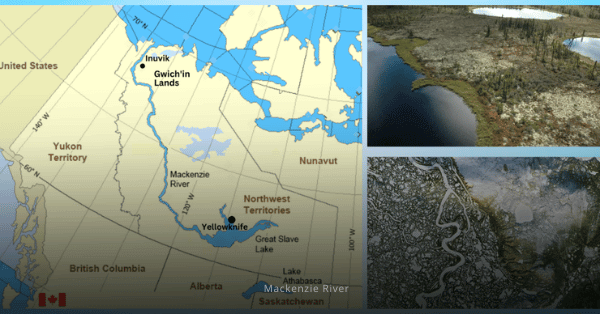
- Mackenzie River is the longest river system in Canada, stretching approximately 1,650 km (1,025 miles).
- It is the second largest river system in North America, covering 1.8 million square kilometers (20% of Canada’s land area).
- The river originates from Great Slave Lake and empties into the Beaufort Sea in the Arctic Ocean, creating a unique and fragile ecosystem.
- For centuries, the Mackenzie River has played a crucial role in transportation, natural resource extraction, and the livelihoods of Indigenous communities.
- The river basin is home to a diverse range of wildlife, including numerous fish species, migratory birds, beavers, moose, and more.
- The river holds deep cultural and economic significance for Indigenous communities, supporting activities like tourism, hydroelectric power generation, and fishing.
- The Peace, Athabasca, and Liard Rivers are some of the most important tributaries of the Mackenzie.
- Prominent lakes like Lake Athabasca, Great Slave Lake, and Great Bear Lake form integral parts of the river system.
- The river is generally 1-2 miles wide, expanding to 3-4 miles in some sections, with a triangular delta measuring 120 miles long and 50 miles wide along the Arctic shore.
Latest News
- 16 July 2024:
- The Mackenzie River, a lifeline for local communities, is facing unprecedented challenges due to record-low water levels caused by extreme heat and minimal precipitation, impacting transportation, fishing, and the economy.

Responses