
Sahul

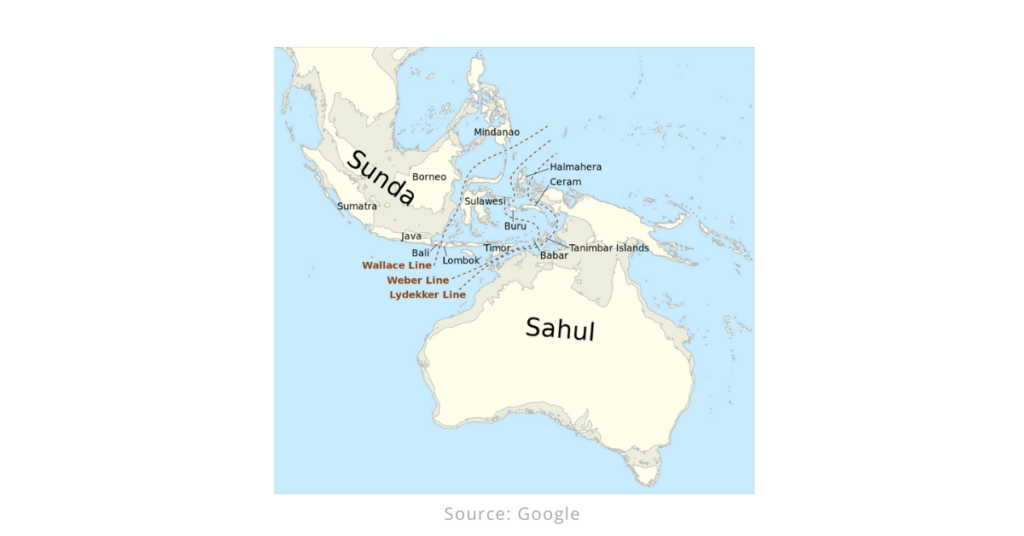
- Sahul was a paleocontinent that encompassed the modern-day landmasses of mainland Australia, Tasmania, New Guinea, and the Aru Islands.
- It can be termed as a supercontinent which was stood exposed on the Earth’s surface when humans were in the middle of last ice age.
- After the last Ice Age, global temperatures increased and sea levels gradually rose, flooding the land bridge and separating mainland Australia from New Guinea and Tasmania.
- The land is also called Sahul-land, Meganesia, Papualand and Greater Australia.
- The name Sahul is used by archeologists, while the name Meganesia tends to be used by zoogeographers.
- The name Greater Australia has been used, but it has been criticised as “cartographic imperialism” because it places greater emphasis upon what is now Australia at the expense of New Guinea.
Latest News
- 17 May 2024:
- Recently, archeologists have found evidence of a lost landscape known as Sahul in the ancient days that helped humans travel across continents from Asia to Australia around 70,000 years ago.
- Researchers discovered Sahul through simulations based on geological and environmental data, which outlined potential migration routes and archaeological sites from 75,000 to 35,000 years ago.

Responses