
Vanilla

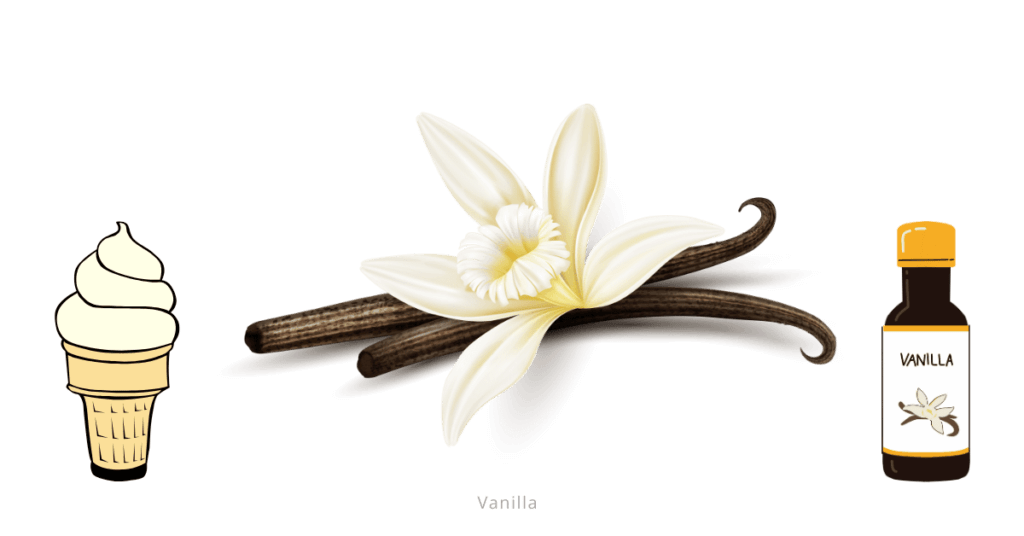
- Vanilla is the only fruit-bearing member of the orchid family. An orchid is a type of flowering plant.
- The meaning of the word vanilla is “little pod” in Spanish.
- Cooks use vanilla as a flavoring in ice cream, cakes, cookies, and many other types of food.
- Vanilla is not only used as a flavor in foods and beverages but also in perfumes.
Where It Is Found?
- Vanilla comes from beans that grow on certain types of orchids in warm parts of the world.
- Madagascar, Indonesia, and China produce large amounts of vanilla.
- French vanilla beans have the distinction of being called “Bourbon” Vanilla because the cultivation first started on the island of Reunion, east of Madagascar.
- At the time, it was known as the “Island of Bourbon.”
Interesting Facts About Vanilla
- Vanilla is the second most expensive spice in the world, after saffron.
- Only the melipona bee can pollinate vanilla. It is found in Central America.
- In Europe, vanilla was once used in the production of certain medicines such as nerve stimulants.
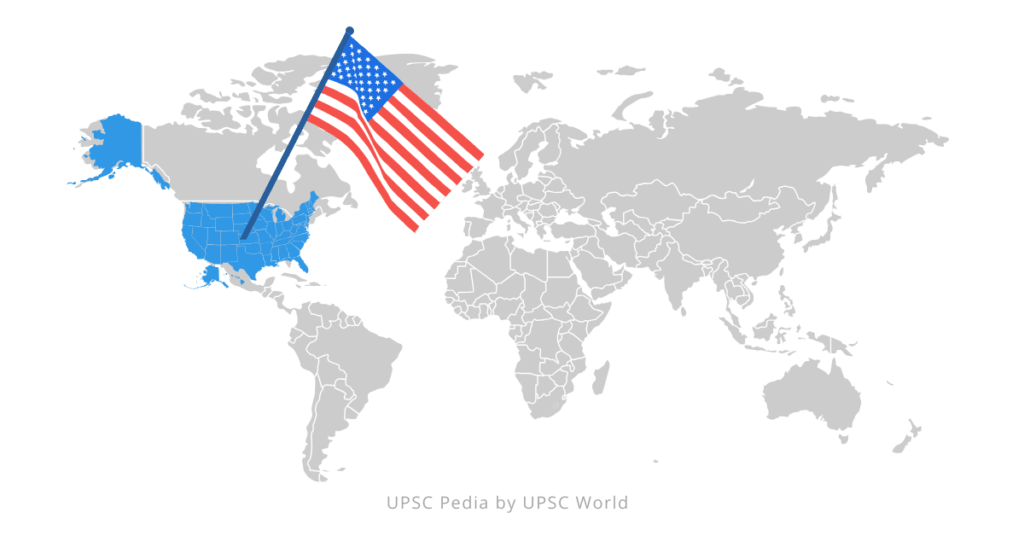
- The United States is the world’s largest consumer of vanilla.
- Spiders don’t like vanilla. Use vanilla to drive away from them.
How it is Produced?
- A vanilla orchid has a long climbing stem that attaches itself to a tree trunk or pole.
- The plant produces large yellowish flowers.
- The fruits that develop from these flowers are long pods with seeds inside.
- People call these pods vanilla beans. The pods may grow to be 8 inches (20 centimeters) long.
- It can take up to nine months for them to be ready for picking.
Hand-pollinated
- The flower that produces the vanilla bean lasts only one day.
- A vanilla orchid plant will not produce beans unless its flowers are pollinated, or fertilized.
- Usually, people pollinate vanilla plants by hand.
- They use a wooden stick to move grains of pollen from the male parts of the flowers to the female parts.
- A vanilla bean has no taste or smell until it is processed.
Fermentation
- Beans are processed by drying and storing them until a chemical change called fermentation takes place.
- Fermentation creates crystals of a chemical called vanillin.
- Vanillin is what gives vanilla its taste and smell.
- The processed beans are crushed and mixed with alcohol to extract the vanillin and other chemicals.
- The liquid that results is called vanilla extract. It is used for flavoring.
History Of Vanilla
- The Aztecs of Mexico flavored their chocolate drinks with vanilla for hundreds of years before the Spanish arrived in their lands in the 1500s.
- The Aztecs called vanilla tlilxóchitl, meaning black flower.
- The Spanish learned about vanilla from the Aztec, and they later introduced it to other Europeans.
- Vanilla soon became a popular flavoring for candy and baked goods.
- But natural vanilla is expensive to produce. Most vanilla today is made from vanillin that is synthesized or created artificially, in a factory.

Responses