
Bagmati River

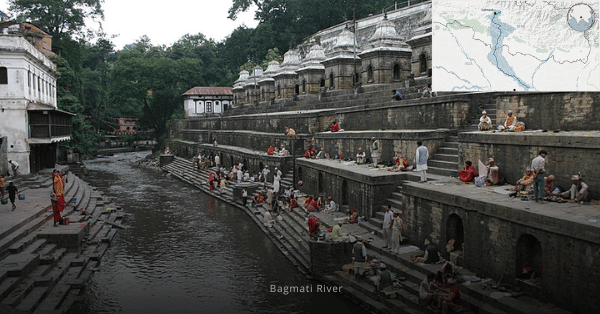
- Bagmati River is revered as a holy river by both Hindus and Buddhists.
- It originates from the Bagdwar area in the Shivapuri Hills, northwestern Kathmandu Valley, Nepal, at an elevation of 2,690 meters (8,825 feet) above sea level.
- With a total length of approximately 225 miles (360 km), the Bagmati River is the longest river in Nepal.
- It is a trans-boundary river, flowing through both Nepal and India.
- The river has several tributaries, including the Dhobikhola, Khadgakhola, and Bishnumati rivers.
- The Bagmati River basin covers three distinct latitudinal zones in the Nepal Himalayas: Mountain, Siwalik, and Terai.
- The river holds significant cultural and religious importance in Nepal, with numerous temples and shrines located along its banks.
- The Pashupatinath Temple, situated on the banks of the Bagmati River, has been designated as a UNESCO World Heritage Site.
- The Bagmati River is prone to flooding, particularly during the monsoon season, which can have a significant impact on local communities and infrastructure.
- However, the river faces environmental concerns, including pollution and erosion, which can negatively impact its ecological health and biodiversity.
Latest News
- 17 July 2024:
- The Bagmati River has overflowed, causing flood situations in Bihar’s Muzaffarpur area, impacting local communities and infrastructure.

Responses