
Lead (Pb)

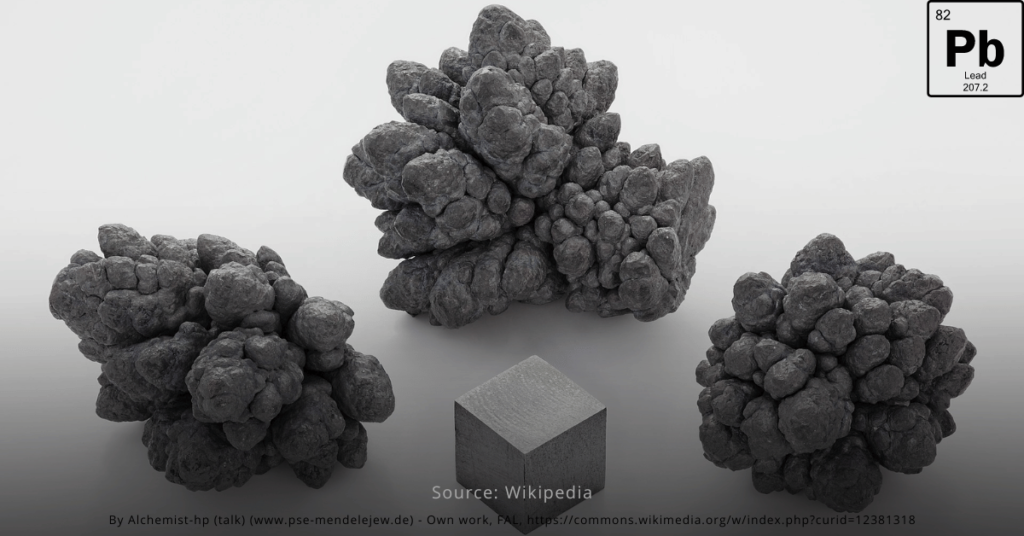
- Lead is a naturally occurring toxic metal found in Earth’s crust.
- Lead in the body is distributed to the brain, liver, kidney and bones. It is stored in the teeth and bones, where it can accumulate over time.
- It is poor conductor of heat and do not react with water.
- Lead exhibits zero Thomson effect, meaning it neither absorbs nor releases heat when an electrical current passes through it
- It is a dull-looking soft, malleable heavy metal that turns from a shiny blue-white when freshly cut to a dull gray when oxidized
- Mining and smelting, recycling of electronic waste and lead-acid batteries, plumbing, toys, lead paint are some of the sources of lead exposure.
- Lead exposure causes damage to child’s brain and nervous system, anaemia, hypertension, toxicity to reproductive organs etc.
- Most of the lead produced today comes from recycled batteries.
- Lead (pb) is an element with atomic number 82.
- Lead can enter drinking water when a chemical reaction occurs in plumbing materials that contain lead.
- This is known as corrosion – dissolving or wearing away of metal from the pipes and fixtures.
- This reaction is more severe when water has high acidity or low mineral content.
Latest News
- 17 May 2024:
- Scientists have developed an affordable sensor for detecting and measuring lead concentrations in water.

Responses