
Typhoon

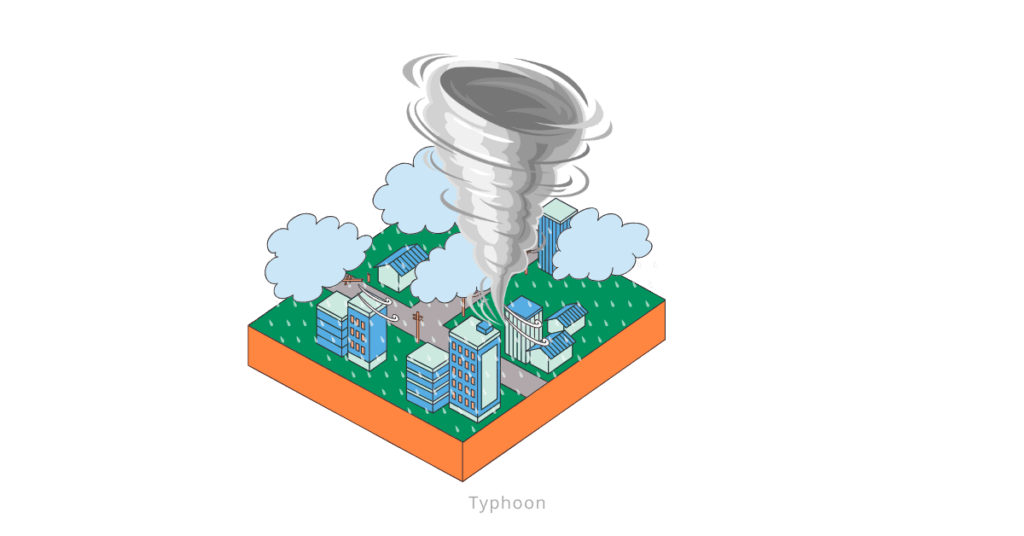
- A typhoon is a powerful and large storm that forms over the ocean in warm areas, characterized by strong winds and heavy rainfall.
- According to World Meteorological Organization, It is a type of intense tropical cyclone that occurs in the western Pacific Ocean, characterized by maximum sustained winds of at least 119 km/h (74 mph).
- Super Typhoon Haiyan, which struck the Philippines in 2013, was one of the strongest typhoons ever recorded, with winds reaching up to 315 km/h (195 mph).
- Typhoons form over warm ocean waters, typically within 20° of the equator, and are fueled by the heat and moisture from these waters.
- The center of a typhoon is called the “eye,” which is a relatively calm area with clear skies and light winds, surrounded by a ring of intense thunderstorms.
- When a typhoon makes landfall, it can bring catastrophic damage, flooding, and storm surges (a rise in sea level due to the storm).
Interesting Facts about Typhoon
- The word “typhoon” comes from the Chinese word “taifeng,” which means “great wind.“
- Typhoons are also known as tropical cyclones or hurricanes in other parts of the world.
- The western Pacific Ocean is prone to typhoons due to its warm waters and favorable atmospheric conditions, with the Philippines being one of the most affected countries.
- Typhoons play a crucial role in the Earth’s climate system, helping to distribute heat and moisture around the globe.
Responses